




DGISPR rejects 'highly dramatised, factually inaccurate' Indian documentary on Operation Sindoor
Web desk
|
18 Aug 2026
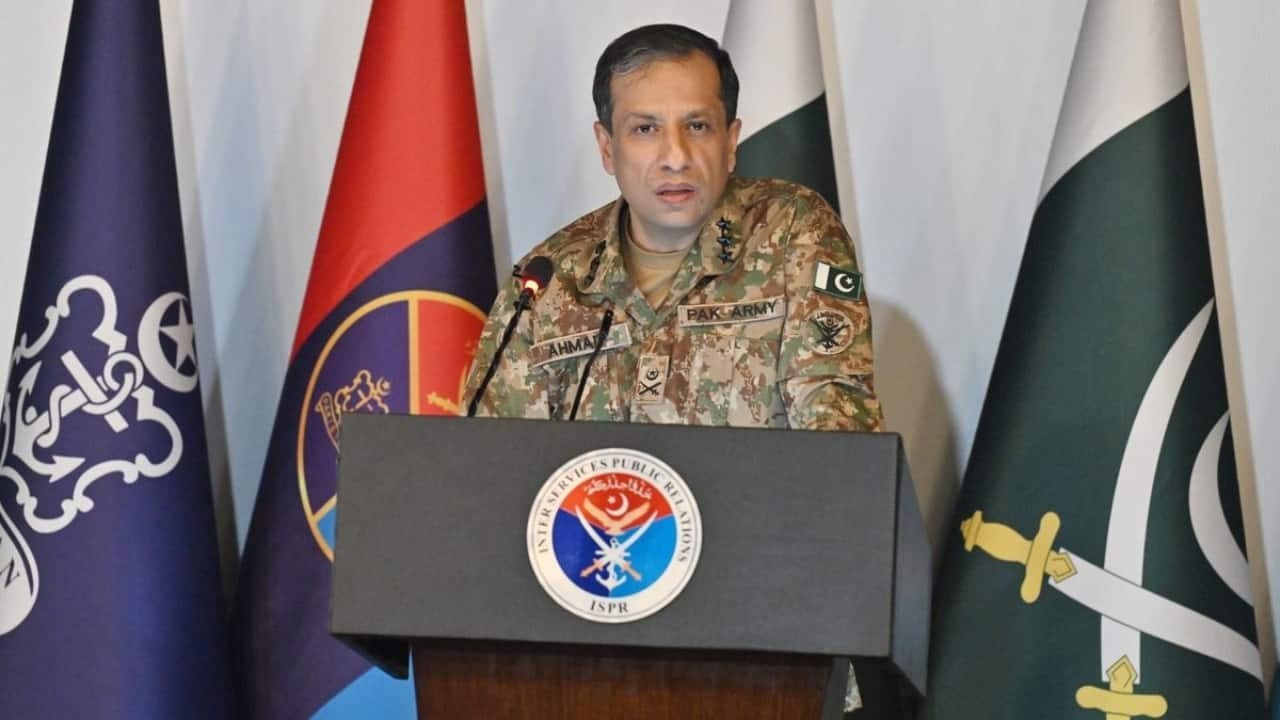
The Inter-Services Public Relations (ISPR) on Monday rejected an Indian documentary about so-called Operation Sindoor, accusing its creators of presenting a “highly dramatised” and factually inaccurate version of the 2025 India-Pakistan conflict.
The military’s media wing said the documentary relied on selective interviews, emotional narration and Bollywood-style reconstructions to reshape the events and present an outcome favourable to India’s domestic audience.
The ISPR particularly criticised the documentary for attempting to link a speech by Chief of Defence Forces and Chief of Army Staff General Syed Asim Munir on April 16, 2025, to the Pahalgam attack on April 22.
It also highlighted what it called a contradiction in India’s own narrative, noting that New Delhi later claimed the three alleged perpetrators of the Pahalgam attack were identified and killed on July 28—82 days after Operation Sindoor. The ISPR questioned how the operation could have been presented as punishment for the perpetrators if they were allegedly eliminated months later.
Pakistan’s military media wing also rejected the documentary’s claim of “100 percent mission success”. It said Pakistan’s armed forces had repelled Indian aggression during what it called “Marka-e-Haq” and claimed that eight Indian military aircraft were shot down.
Pakistan subsequently launched Operation Bunyan-un-Marsoos, using missiles, precision-guided weapons, drones and artillery against what the ISPR described as 26 military targets.
The ISPR further argued that the documentary itself contained statements from Indian military officials acknowledging significant Pakistani missile and drone activity, prolonged fighting along the Line of Control and the activation of Indian air-defence systems. According to the ISPR, these admissions were difficult to reconcile with the documentary’s portrayal of a decisive Indian victory.
Finally, the ISPR disputed the documentary’s account of how the conflict ended, saying hostilities stopped following communication between the Directors General of Military Operations of India and Pakistan and an agreed cessation of military action.
It argued that a ceasefire facilitated by the United States could not subsequently be portrayed as evidence of an unconditional Indian victory. The four-day confrontation began after India launched strikes on May 7, 2025, following the Pahalgam attack, while Pakistan responded with Operation Bunyan-un-Marsoos on May 10, the same day then-US President Donald Trump announced the ceasefire.




Comments
0 comment