




Opinion: How democratic are the elections in Israel?
Jahanzaib Sheikh
|
27 Oct 2026
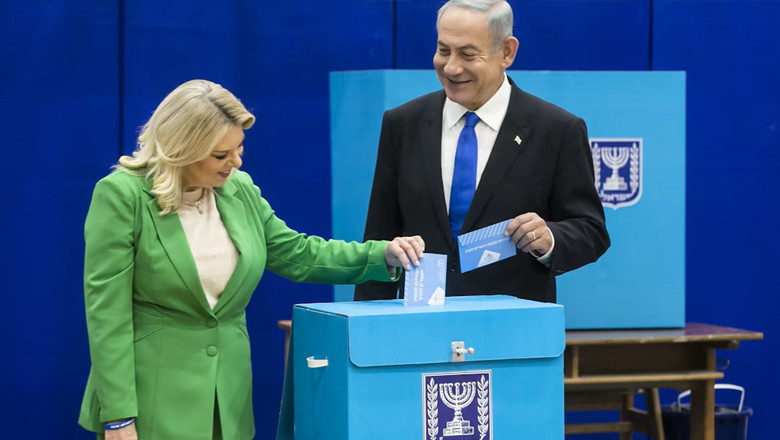
Benjamin Netanyahu is vying for another term in power as elections are held in Israel. Many analysts and commentators have termed these elections the "most consequential" in history, in the aftermath of the October 7 attacks, the genocidal war in Gaza, and intensifying campaigns of ethnic cleansing in the occupied West Bank.
The fact that a leader accused of war crimes can convincingly present himself as the "saviour of his nation" while contesting elections in the Middle East raises questions for those who continuously beat the drum for Western-style democracy in the region.
A less-worse option?
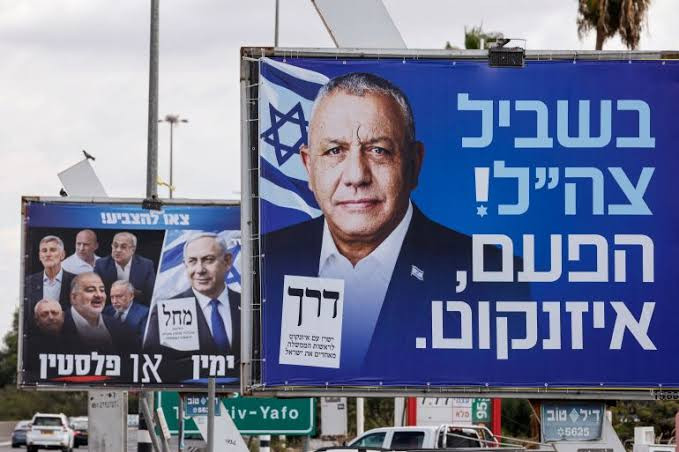
Gadi Eisenkot has emerged as a prominent challenger to Netanyahu's right-wing political alliance. A former IDF general, Eisenkot is associated with the "Dahiya doctrine," a military strategy linked to the use of overwhelming force and the destruction of civilian infrastructure to weaken an enemy.
Despite positioning himself against Netanyahu, Eisenkot's political vision raises questions about whether a change in leadership would bring a fundamental shift in Israel's policies towards Palestinians.
A promising leader for a pariah state?
Eisenkot shares several positions with Netanyahu, particularly his opposition to Palestinian statehood. He has also supported the continuation of Israeli settlement expansion in the occupied territories while criticising illegal settlers whose actions, he argues, damage Israel's international standing.
At the same time, Eisenkot has called for an investigation into the October 7 attacks and the revocation of military service exemptions for ultra-Orthodox Jews. Both issues remain among the most contentious in Israeli politics.
His challenge to Netanyahu may therefore represent a contest over leadership, governance and international standing rather than a departure from the prevailing political consensus on erasure of Palestinian identity and expansion of settler colonial project.
Apartheid in action?
While many Arab citizens of Israel exercise their right to vote, giving them a limited yet somehow decisive representation in the Knesset, millions of Palestinians in the occupied West Bank and East Jerusalem are deprived of the right to vote that leaves them outside an electoral system whose politics is solely shaped by a Jewish majority.
This exclusion raises a fundamental question: how can a political system claim democratic legitimacy when millions of "others" affected by its policies have no vote in choosing the government that adversely rule over them?
Critics of Israel increasingly describe this unequal system of rights and political representation as apartheid. The issue extends beyond the conduct of elections to the broader question of who is entitled to political participation and equal protection under the law.
Only democracy in Middle East?
Democracy is not defined by elections alone, but also by political representation, equal rights, accountability and, last but not least, adherence to international law and human rights.
Mounting evidence of war crimes, alongside an apartheid apparatus in action, puts the credibility of Israel's claim to be the "only democracy" in the Middle East into question.





Comments
0 comment