




Emirates profits plunge 66% amid Middle East war and soaring fuel prices
Web Desk
|
5 Nov 2026
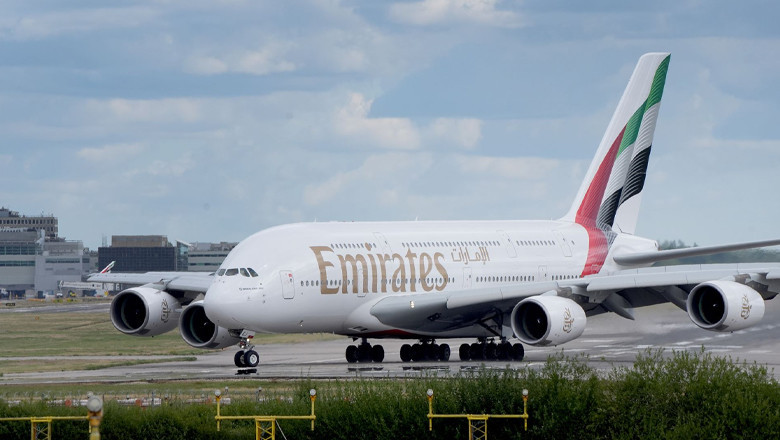
Emirates Group has reported a sharp 66 percent decline in its first-half net profit, as escalating geopolitical tensions in the Middle East, flight disruptions and soaring fuel prices put pressure on the airline's financial performance.
The Dubai-based aviation giant recorded a net profit of $1 billion for the six months, compared with $2.9 billion during the corresponding period last year, highlighting the growing financial impact of the regional conflict on the aviation industry.
The ongoing war has created significant challenges for the United Arab Emirates' aviation sector, with Dubai International Airport among the facilities affected by Iranian drone and missile attacks. Flight disruptions and declining tourist confidence further complicated operations during the reporting period.
Emirates Chairman and Chief Executive Sheikh Ahmed bin Saeed Al Maktoum described the first half of the financial year as particularly challenging, pointing to unprecedented regional instability and higher fuel costs.
Despite the difficult operating environment, the group maintained relatively strong revenue and cash positions, supported by sustained customer demand and improved performance in its cargo business. Global jet fuel prices doubled compared with the same period last year, adding considerable pressure to operating expenses.
The airline's after-tax profit declined 66 percent to $903 million, while its revenue fell 13 percent. Passenger traffic also experienced a significant contraction, with Emirates transporting 21.8 million passengers between April and September, down 22 percent year-on-year.
However, cargo operations provided an important source of support. Cargo revenue increased by 52 percent despite a slight reduction in the volume of goods transported, demonstrating the resilience of the group's freight business amid wider aviation challenges.
The group also reduced its workforce by two percent during the six-month period, bringing total employee numbers to 128,237.
Meanwhile, disruptions to shipping through the strategically important Strait of Hormuz have contributed to rising energy prices, further complicating the operating environment for Gulf-based airlines.
The Middle East plays a central role in international aviation, particularly as a major transit hub connecting Europe, Asia, the Americas and Oceania. Prolonged instability in the region could therefore have wider implications for global air travel and passenger connectivity.
Despite mounting challenges, Emirates management expressed cautious confidence about the second half of the financial year. Sheikh Ahmed said the group would maintain a disciplined approach to expenditure while closely monitoring geopolitical developments and market conditions.
The airline has also introduced several measures to reassure travellers, including expanded travel insurance coverage, flexible ticket-change options and more accommodating refund policies.
Alongside efforts to stabilise its operations, Emirates is continuing its long-term expansion plans.
In May, the group began construction of a $5.1 billion engineering and maintenance facility at Dubai's Al Maktoum International Airport, with completion expected in the mid-2030s.










Comments
0 comment