




Pakistan wants to build its own smartphone industry, so why do consumers prefer used imports?
Webdesk
|
26 Oct 2026
Pakistan has spent years building its mobile phone manufacturing and assembly sector, attracting international brands, investing in production facilities and creating local employment. Yet a growing preference for second-hand imported smartphones is raising an important question: if local industries in Pakistan can assemble millions of phones, why are so many consumers still looking elsewhere?
For companies such as Inovi Telecom, a Pakistan-based mobile phone manufacturer working with international brands including Infinix and itel, this is more than a market trend. It reflects the next challenge facing Pakistan’s ambitions to build a sustainable technology manufacturing ecosystem.
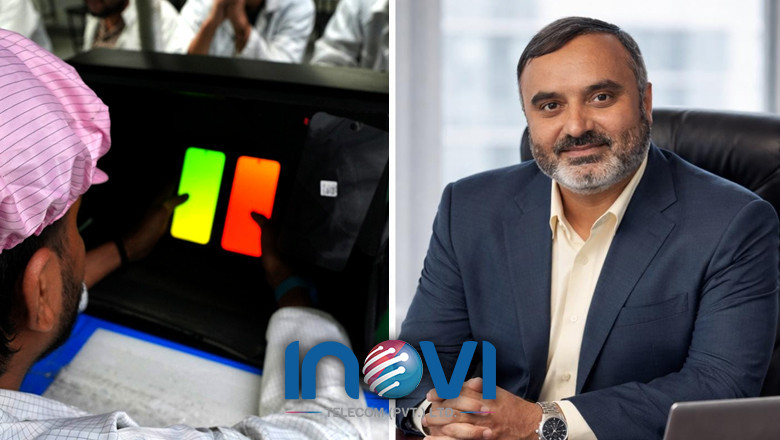
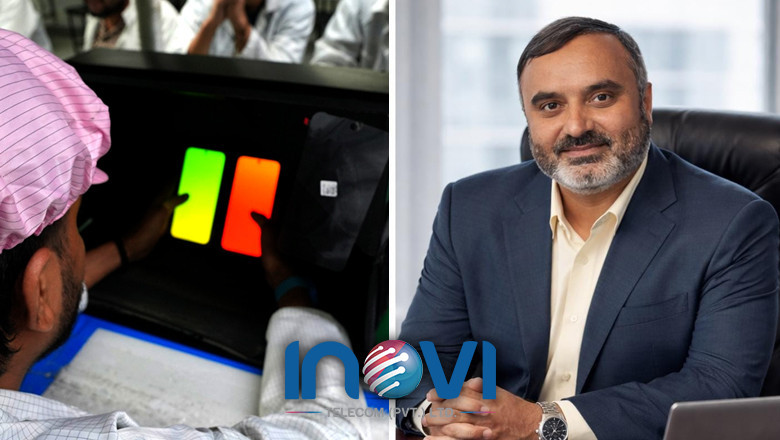
Under the leadership of CEO Zeeshan Mianoor, Inovi Telecom has contributed to the development of local mobile phone assembly, supporting the broader effort to establish Pakistan as a manufacturing base rather than simply a market for imported finished devices. The company’s operations span key production stages, including software installation, testing, mass production and packaging.
But local manufacturing is only one part of the equation. The other is convincing consumers that a new phone offers better value than a used imported alternative.
The consumer's dilemma: Price versus performance
For Pakistani buyers, smartphones have become essential tools for education, work, communication and entertainment. However, inflation, currency fluctuations, taxation and rising device prices have made purchasing decisions increasingly difficult.
The imported used phone market offers an appealing proposition. For a similar budget, consumers may be able to purchase a second-hand premium device with a better camera, more powerful processor or higher-quality display than a brand-new entry-level smartphone.
This creates a particular challenge for local manufacturers. Even when locally assembled devices offer warranties, accessible service networks and competitive specifications, consumers comparing products purely on hardware may still favour a used flagship.
The preference is not necessarily a rejection of locally assembled phones. Instead, it highlights a gap between what different consumer segments want and what they can afford.
Why local assembly still matters
Local assembly has helped Pakistan develop industrial capacity, generate employment and build technical expertise. It also provides a foundation for deeper investment in electronics manufacturing, quality assurance and engineering.
Inovi Telecom is part of this evolving landscape. Its work with established international smartphone brands demonstrates how partnerships can bring manufacturing processes and production capabilities into Pakistan.
However, assembly should be viewed as a starting point, not the final destination. Building a stronger domestic industry requires continued investment in technical skills, component supply chains, research and development, product quality and export competitiveness.
For manufacturers, the challenge is to translate production capability into products that meet consumer expectations without making smartphones prohibitively expensive and building a sustainable manufacturing eco-system that requires investment in people, processes and long term capabilities. At Inovi Telecom, operational excellence, quality, teamwork and continuous improvement are importance pillars of this journey.
Zeeshan Mianoor on the road ahead
For Pakistan’s mobile phone industry, the debate should not simply be about locally assembled devices versus imported used phones. It should be about creating a market in which consumers have access to reliable, competitively priced technology while domestic manufacturing continues to grow.
“Pakistan has made significant progress in developing its local mobile phone manufacturing capabilities. We believe this progress creates an opportunity to build an even stronger technology ecosystem- one that develops local talent, strengthens industrial expertise and delivers greater value to the consumers.
At Inovi, we see local manufacturing as a long term commitment to Pakistan’s potential; and we remain focused on contributing to that journey through quality, collaboration and continuous improvement. After all, Pakistan shouldn’t just be a market that buys technology. It should be a country that builds it.”
– Zeeshan Mianoor, CEO Invo Telecom
His perspective reflects a broader question for the industry: how can Pakistan make local production commercially sustainable while responding to consumers whose expectations continue to evolve?
From assembly lines to a stronger technology ecosystem:
The way forward will require collaboration between manufacturers, international technology partners, policymakers and the wider retail sector. Predictable regulations, competitive production costs, investment in technical expertise and a supportive export environment can help local manufacturers build long-term capacity.
At the same time, consumers must remain central to the conversation. Competitive pricing, dependable after sales service, product reliability and meaningful innovation will be essential to earning their confidence.
Pakistan has demonstrated that local mobile phone assembly is possible at scale. The next milestone is to build an industry that can compete not only on production volumes, but also on brands, value, quality and consumer trust.
For Inovi Telecom the ambition extends beyond assembling phones in Pakistan. It is about contributing to an industry that develops local capabilities, creates lasting business value and helps Pakistan take meaningful steps, towards a stronger technology future.









Comments
0 comment