




1 hour ago
Greenhouse gas levels hit record highs in 2025, UN agency warns
Web Desk
|
27 Oct 2026
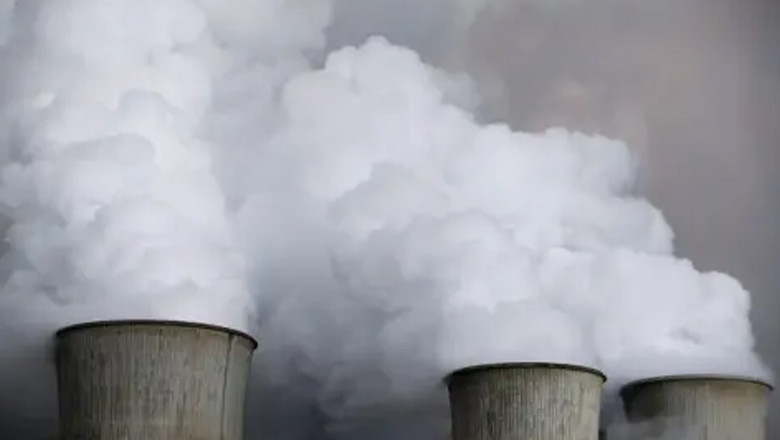
Concentrations of greenhouse gases in the atmosphere reached unprecedented levels in 2025, adding to the long-term climate impacts that could persist for centuries, the United Nations said on Tuesday.
The World Meteorological Organisation (WMO) reported that levels of the three main greenhouse gases — carbon dioxide, methane and nitrous oxide — all climbed to record highs last year, fuelling further global warming.
The findings were published in the agency’s 22nd annual Greenhouse Gas Bulletin ahead of the COP31 UN climate summit, scheduled to take place in Antalya, Turkiye, from November 9 to 20.
“Another year, another new record,” WMO Deputy Secretary-General Ko Barrett said.
She warned that the gases were trapping unprecedented amounts of heat in the atmosphere, increasing the energy available for extreme weather events and raising risks for economies and societies.
Barrett noted that the past 11 years had been the warmest on record and said the trend was expected to continue. Carbon dioxide, she added, remains in the atmosphere for a long time, affecting the climate for decades and even centuries.
The bulletin measures the concentration of greenhouse gases in the atmosphere rather than the amount emitted each year as the world continues to burn coal, oil and gas.
In 2025, atmospheric carbon dioxide reached 426.8 parts per million (ppm), while methane stood at 1,948 parts per billion and nitrous oxide at 339.1 parts per billion.
These levels represented 153 per cent, 267pc and 126pc, respectively, of their pre-industrial concentrations before 1750.
Carbon dioxide is responsible for about 66 per cent of the warming effect caused by the three main greenhouse gases. Roughly half of the CO2 emitted annually remains in the atmosphere, while the rest is absorbed by land and oceans.
The global average concentration of carbon dioxide increased by 2.8 ppm between 2024 and 2025. Although lower than the record rise of 3.6 ppm between 2023 and 2024, the latest increase remained above the average annual growth of 2.6 ppm recorded over the past decade.
WMO senior scientific officer Oksana Tarasova attributed the slower rise partly to the recovery of land-based carbon sinks and lower carbon emissions from fires in 2025, following the strong El Nino of 2023-24.
El Nino is a naturally occurring climate pattern that can raise global temperatures and influence weather conditions worldwide.
Tarasova stressed that the annual increase of 2.8 ppm still represented a substantial addition of carbon to the atmosphere from fossil fuel use. She also warned that greenhouse gas concentrations could rise further in 2026 due to continued fossil fuel burning and the development of a powerful El Nino, which could weaken the ability of land ecosystems to absorb carbon.
The annual increase in atmospheric carbon dioxide was just 0.8 ppm in the 1960s, compared with an average of 2.6 ppm over the past decade.









Comments
0 comment