




2 hours ago
Pakistan has second-highest hunger level in South Asia
Web Desk
|
15 Oct 2026
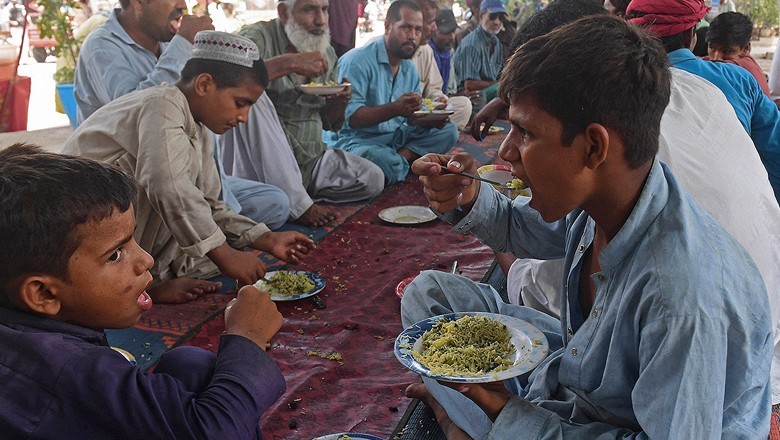
More than one in three children under five in Pakistan suffer from stunted growth, while millions of people face food insecurity, according to figures cited in the 2026 Global Hunger Index (GHI) and by the World Food Programme (WFP).
Pakistan ranked 106th among 122 countries assessed in the index, scoring 25.5 points. The report classified the country's hunger level as serious.
The figures show that 33.6% of Pakistani children under five are stunted and 9.8% suffer from wasting. The index also put the proportion of the population facing undernourishment at 16.1%. The under-five child mortality rate was recorded at 5.6%.
Pakistan's position reflects persistent challenges in ensuring access to adequate food and nutrition. However, the country has made progress over the longer term. Its GHI score fell from 36.2 in 2000 to 25.5 in 2026, which the report describes as a substantial improvement.
The country's score remains above the South Asian regional average of 23.5 and the global average of 18.1. Afghanistan was the only other South Asian country ranked below Pakistan, coming in at 108th with a score of 28.6.
The index is published annually by Concern Worldwide, Welthungerhilfe and the Institute for International Law of Peace and Armed Conflict. It assesses hunger using four indicators: undernourishment, child stunting, child wasting and child mortality.
Undernourishment measures the proportion of people who do not receive enough calories. Stunting refers to children who are too short for their age, while wasting describes children whose weight is too low for their height. Child mortality measures deaths before the age of five and reflects, among other factors, the effects of inadequate nutrition and unhealthy living conditions.
The WFP has separately highlighted the scale of child malnutrition in Pakistan, estimating that 40% of children under five suffer from stunted growth. It has called for sustained action across different sectors to improve access to nutritious diets and essential services for women, children and adolescents.
Food insecurity also remains widespread. According to the WFP, the latest Integrated Food Security Phase Classification (IPC) analysis found that 7.5 million people in Pakistan were facing crisis-level food insecurity or worse. Of these, 1.25 million were experiencing critical levels of acute food insecurity.
Climate change poses another challenge to the country's food security. Pakistan is highly vulnerable to floods, droughts and heatwaves, which can damage crops, destroy infrastructure and disrupt livelihoods.
Despite contributing less than 1% of global greenhouse gas emissions, Pakistan faces significant risks from climate-related disasters. Repeated extreme weather events have caused deaths and widespread damage, placing further pressure on communities already struggling with food insecurity and inadequate nutrition.









Comments
0 comment