




From Imran Khan to Chavez: Memorable speeches that made history at UNGA
Web Desk
|
24 Sep 2026
For nearly eight decades, the United Nations General Assembly has remained the world’s largest diplomatic forum, providing every member state with an opportunity to present its views on global issues, challenges and priorities. However, the history of the United Nations also includes several memorable moments when world leaders departed from conventional diplomatic rhetoric and delivered speeches that continue to be remembered years later.
The 81st session of the United Nations General Assembly is currently underway in New York, where leaders from around the world are addressing the gathering.
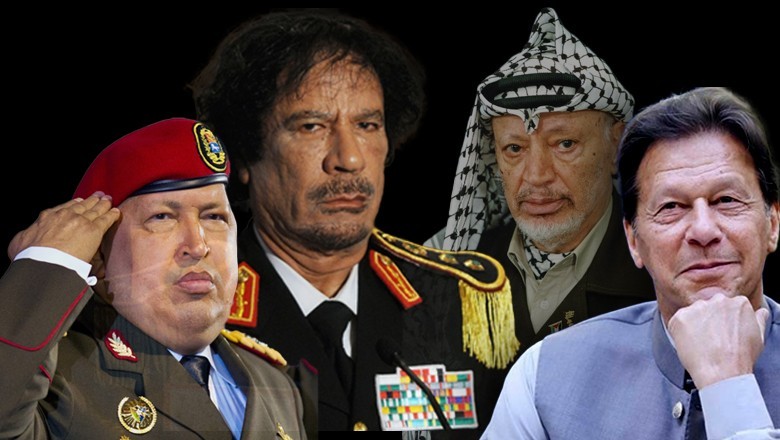
Former Prime Minister Imran Khan — 2019
Former Pakistani Prime Minister Imran Khan’s speech at the 74th session of the UN General Assembly on September 27, 2019, is among the most widely viewed speeches on the United Nations’ official YouTube channel.
One notable aspect of the speech was that, instead of delivering a conventional diplomatic address based on prepared notes, Imran Khan spoke extemporaneously for nearly 50 minutes. He focused on four major global and regional issues.
During the speech, he devoted around 15 to 20 minutes to Islamophobia and strongly rejected anti-Islam narratives. His presentation of the Muslim perspective on Islamophobia received widespread attention internationally.
Addressing the General Assembly, Imran Khan said that Western leaders had linked terrorism with Islam. He argued that Islam was a single faith and rejected the concept of “extremist Islam,” saying that no religion permits extremism.
He also spoke about the emotional significance of the Prophet Muhammad (PBUH) to Muslims, saying that insulting or mocking the Prophet caused deep pain among Muslims.
Drawing a comparison with the Holocaust, Imran Khan said that just as the West treated the Holocaust as a sensitive subject out of respect for Jewish sentiments, the feelings of Muslims should also be respected.
During the same speech, Imran Khan called on the United Nations to establish an international day against Islamophobia. In 2022, the UN General Assembly adopted a resolution designating March 15 as the International Day to Combat Islamophobia.
Muammar Gaddafi’s 100-minute speech — 2009
Former Libyan leader Muammar Gaddafi addressed the UN General Assembly for the first and only time in 2009. His speech was so unconventional and confrontational that it remains one of the forum’s memorable addresses.
Gaddafi strongly criticised the major world powers and accused the five permanent members of the UN Security Council of holding the world hostage through their veto power. He called for the abolition of the veto.
He also launched a sharp attack on the Security Council, referring to it as a “terrorism council” and arguing that instead of establishing peace, it had contributed to wars around the world.
Standing at the podium, Gaddafi waved a copy of the UN Charter in the air and read sections of it aloud. He accused the organisation of failing to apply its own principles equally and of protecting the interests of powerful countries.
He called for an investigation into the US invasion of Iraq in 2003, questioning why the UN Charter had been treated as sacred when Iraq invaded Kuwait in 1990, but was effectively disregarded when the United States invaded Iraq.
Although leaders are generally allocated around 15 minutes to speak during the General Assembly, speeches often exceed the allotted time. Gaddafi’s address lasted approximately 100 minutes. At one point, his interpreter reportedly became exhausted and stopped interpreting.
One part of Gaddafi’s speech resurfaces on social media whenever discussions about global pandemics emerge. He claimed that many deadly viruses were not naturally occurring but biological weapons developed in laboratories. He alleged that such viruses were deliberately created so that pharmaceutical companies could later make trillions of dollars by selling vaccines.
When Hugo Chávez called President Bush a ‘devil’ — 2006
Relations between Venezuela and the United States were highly strained during the 61st session of the UN General Assembly. When Venezuelan President Hugo Chávez arrived in New York to attend the session, his address became one of the most memorable moments in the forum’s history.
As Chávez began his speech, he pointed toward the podium where US President George W. Bush had spoken the previous day.
“Yesterday, the devil came here,” Chávez said, adding that Bush had spoken as though he owned the world. He then remarked that the podium still smelled of sulphur.
The remark stunned diplomats in the hall, while some delegations applauded. During the speech, Chávez also made the sign of the cross, appearing to invoke protection from an evil spirit.
Chávez strongly criticised the Bush administration’s policies, referring to the situation in Iraq, Lebanon and Palestine. He accused the United States of pursuing domination and its interests through war, including through its support for Israeli military action in Lebanon.
In a subsequent statement, Chávez said he had not planned to use the remark about the “devil.” He said he had genuinely smelled sulphur that day and made the comment spontaneously.
Yasser Arafat: An Olive Branch and a Freedom Fighter’s Gun — 1974
Palestinian political leader Yasser Arafat attended a UN General Assembly session for the first time on November 13, 1974. A line from his historic speech remains widely remembered.
It was the first time that a representative of a non-state entity had addressed the UN General Assembly. Arafat had been invited to speak in his capacity as chairman of the Palestine Liberation Organization (PLO).
Arafat arrived at the United Nations wearing his traditional military-style uniform and a Palestinian keffiyeh, which has since become an internationally recognised symbol of Palestinian identity and resistance.
When Arafat approached the podium, the world saw that he was wearing a pistol holster around his waist. Representing the Palestinian struggle for independence, he delivered a line that would become closely associated with his speech.
Addressing the international community, Arafat said he had come carrying “an olive branch in one hand and the gun of a freedom fighter in the other,” urging the world not to allow the olive branch to fall from his hand.
Arafat’s style and speech remain among the memorable chapters of diplomatic and protest history, as he used culture, resistance and diplomacy to present the Palestinian cause to the world.
Antonio Guterres calls for Palestinian Statehood — 2026
The ongoing UN General Assembly session in New York has also seen the Palestinian cause receive significant attention from UN Secretary-General Antonio Guterres and several world leaders.
At the opening of the current session, Guterres delivered what was described as his final address in a forthright and emotional tone, addressing some of the major challenges facing the world.
He spoke about four major challenges confronting humanity: wars, inequality, climate change and artificial intelligence. He also strongly criticised Israeli military actions in Gaza and the establishment of settlements in the West Bank, while calling for immediate implementation of orders issued by the International Court of Justice.
In his address, Guterres said that the establishment of an independent Palestinian state was the only credible and viable solution for peace in the region.







Comments
0 comment