




Turning trash into treasure: The story of Karachi’s sustainable library
Web Desk
|
24 Jun 2026
What began as a routine waste collection operation in Karachi has evolved into an innovative community project that is redefining how people think about waste, sustainability and education.
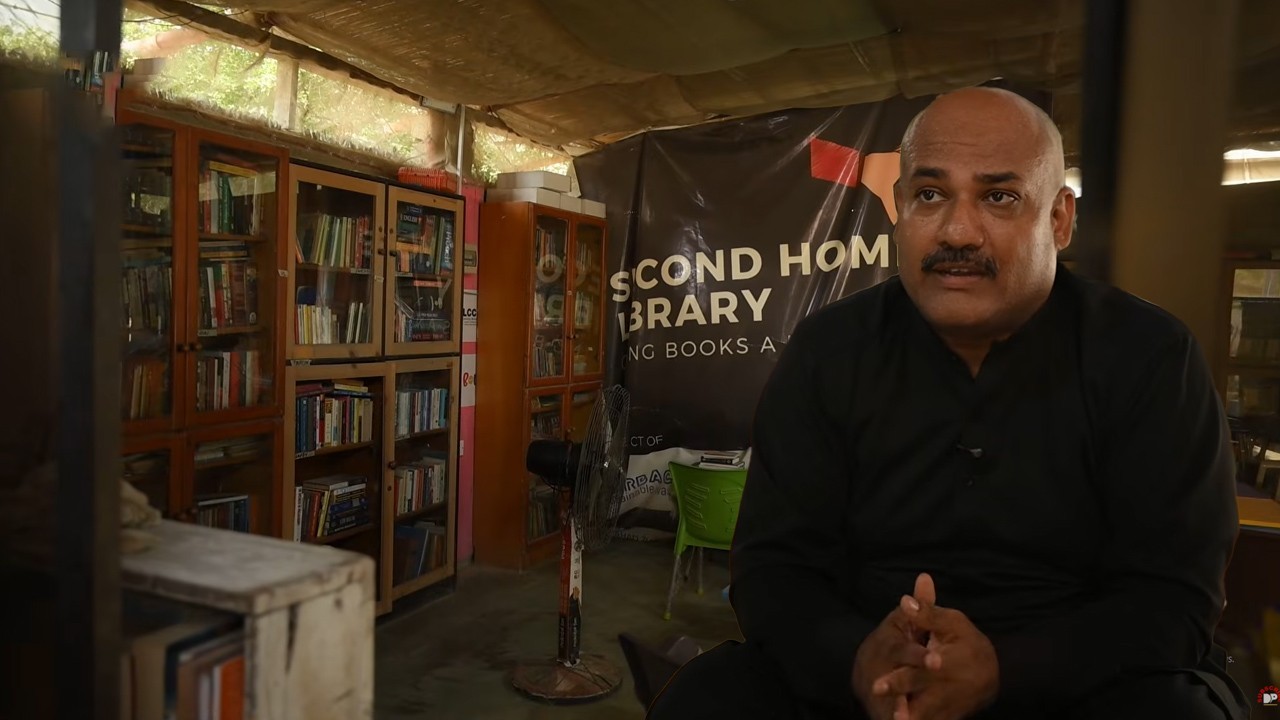
Ahmad Shabbar, founder and CEO of Garbage Canistan Waste Management told Dialogue Pakistan the idea was never simply about collecting rubbish. It was about creating meaningful impact.
Born and raised in Karachi, Shabbar spent nearly a decade in the United States before returning to Pakistan in 2016. After a brief stint as a mechanical design engineer at Aga Khan University, he decided to pursue a different path—one focused on solving real-world challenges rather than following a conventional career route.
"I realised that success is not just about making money," he says. "It's about serving people, contributing to development and creating positive change."
"When I walked into the office one day and saw nearly 2,000 books stacked around me, I realised the place already looked like a library," Shabbar recalls. "I simply couldn't bring myself to send those books to the scrap heap."
The growing collection coincided with a need identified by the Rana Liaquat Craft and Colony (RLCC), which operates the Rana Liaquat Public School in Karachi. As student numbers increased, the school's existing library space was gradually converted into classrooms, creating an urgent demand for a new library.
At the same time, children's organisation Kids Bolo was looking to support educational initiatives for young people. The shared objectives brought the organisations together, laying the foundation for a unique collaboration.
RLCC offered a plot of land measuring approximately 150 square yards, while Shabbar proposed an ambitious condition: the library itself would be built using salvaged and natural materials.
Rather than constructing a conventional building, the team embraced a design philosophy rooted in sustainability, local knowledge and resource recovery.
Working alongside construction experts and collaborators, they adopted two guiding principles. The first was that indigenous wisdom and scientific knowledge should complement one another. The second was that sustainability must extend beyond environmental concerns to include financial viability and structural durability.
For Shabbar, the project challenges conventional assumptions about waste.
"Something only becomes waste when we stop using it," he explains. "When it is put to use again, it becomes a resource."
Today, the library stands as more than just a repository of books. It is a practical demonstration of circular economy principles, showing how materials that would otherwise end up in landfill can be transformed into valuable community assets.
In a city where discussions about waste management often centre on problems and shortcomings, the project offers a different narrative—one focused on action, innovation and possibility.
What started with a pile of unwanted books has become a symbol of how creativity and collaboration can turn discarded materials into spaces that educate, inspire and serve future generations.





Comments
0 comment