




1 hour ago
PIMS fire: Inquiry report finds systemic, institutional failures behind deaths of 14 newborns
Web Desk
|
15 Sep 2026
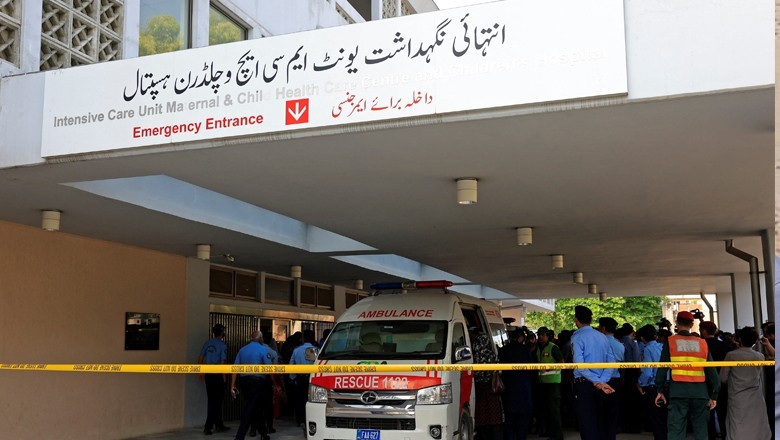
The complete report of the inquiry committee constituted by Prime Minister Shehbaz Sharif to investigate the August 26 fire at the PIMS nursery has been released.
The report was issued on the directions of Prime Minister Shehbaz Sharif.
According to the findings of the report being reported by media outlets, 14 of the 15 newborns present in the Mother and Child Health (MCH) nursery at the Pakistan Institute of Medical Sciences (PIMS) died in the fire, while one infant survived.
The inquiry committee examined not only the cause of the fire but also the factors that contributed to its severe consequences and devastating spread.
It reviewed the emergency response, arrangements for evacuating the infants, the determination of individual and institutional responsibility, and the reforms required to prevent similar incidents.
The committee’s findings and recommendations were based on a structured 52-point investigation.
The investigation examined forensic evidence, CCTV footage, call records, and engineering and maintenance documents. Medical and accident records, duty and attendance records, witness statements, regulatory records and previous inquiries were also reviewed.
CCTV footage confirmed that the emergency situation inside the PIMS nursery developed with extraordinary speed.
According to the inquiry report, the fire was clearly burning by approximately 6:38:15 p.m., at which point frontline staff attempted to respond. Charge Nurse Nasreen Akhtar, security guard Maria Saleem and Staff Nurse Razia Noreen acted within moments to rescue the babies. Nurse Razia Noreen rescued one newborn and attempted to re-enter the nursery.
The report states that Dr Muhammad Abdul Rahman was also present at the scene when the fire broke out. By approximately 6:39:15 p.m., dense smoke had completely obstructed the CCTV camera’s view.
The evidence contradicts the general allegation that frontline staff abandoned the newborn babies. Several staff members took immediate and courageous action under extremely difficult circumstances.
The inquiry report states that, according to the strongest technical evidence from the National Forensic Agency, the most likely point of origin of the fire was an electrical cable associated with AC Unit No. 2, located near AC Unit No. 1.
The fire may have resulted from abnormal localized electrical heating, excessive current, a high-resistance connection or another localized electrical fault. This likely damaged the cable insulation and ignited nearby combustible material.
According to the report, the evidence does not support arson, the possibility that the fire originated at multiple locations, a claim that an external electrical fault caused the fire on the part of IESCO, or the possibility that oxygen leaked before the fire started.
There is also no evidence that an incubator or warmer was the source of the fire. The inquiry concluded that an electrical fault was the most likely cause.
The exact nature of the electrical fault and the identification of the individual or institution responsible for preventing it require separate determination. Maintenance records show that the nursery’s AC units had been serviced. However, there was no effective system for comprehensive electrical safety inspections covering cables, terminations, insulation, earthing and breaker protection.
The report stresses that the fact that electrical equipment was operational does not mean that its electrical installation was completely protected against fire.
According to the investigation, there was a significant institutional gap between keeping equipment operational and ensuring its complete safety. The sensitive conditions inside the nursery further intensified the devastating impact of the fire.
The 10-bed unit was treating 15 medically critical newborns. Several infants were dependent on oxygen or respiratory support, making rapid evacuation to a safe location extremely difficult. Only two doctors and two nurses were present at the time, while resources for safe evacuation were extremely limited.
The report states that no record was found of formally approved, staff-trained and regularly practised standard operating procedures for evacuating newborns from the nursery. There was also no evidence of an automatic smoke detection system, fire alarm or sprinkler system in the affected area.
Combustible materials and the oxygen-rich environment greatly intensified the fire and smoke. Frontline staff began responding within seconds of the fire breaking out.
According to the inquiry report, CES records show that external notification was made at 6:54 p.m., dispatch occurred at 6:55 p.m., and operational arrival was recorded at 7:01 p.m. The major concern, therefore, was the unacceptable gap between the fire becoming visible at approximately 6:38 p.m. and the activation of external assistance.
PIMS was unable to provide evidence of an established and tested Incident Command System capable of immediately activating an alarm, external notification, evacuation, hazard control, access management and coordinated emergency response as soon as a fire was detected.
The report states that the PIMS nursery tragedy occurred against a background of known but inadequately addressed risks that required preventive action by hospital management. Previous correspondence from the Capital Development Authority (CDA) and recommendations issued by the Federal Ombudsman in 2015 had already identified deficiencies. PIMS itself had acknowledged the outdated nature of its fire-safety infrastructure in 2025.
A fire at the nursing hostel on July 6, 2026 had already highlighted deficiencies in timely fire detection, alarms, electrical inspections, evacuation, firefighting equipment, fire drills and emergency planning. However, these previous warnings were not converted into a comprehensive, time-bound and independently verified corrective programme before the nursery tragedy.
According to the report, even if the specific fault in AC Unit No. 2 could not have been identified in advance, the need for coordinated and robust fire-safety preparedness was clear. The hospital administration failed to adequately address this need.
The committee concluded that systemic and institutional failure had been established in the matter. However, individual responsibility will be determined in accordance with the relevant rules and on the basis of available evidence.
The inquiry report states that PIMS and senior management bear primary institutional responsibility for failing to convert known risks and previous warnings into an effective safety system.





Comments
0 comment