




US SC blocks move to undo birthright citizenship
Web desk
|
1 Jul 2026
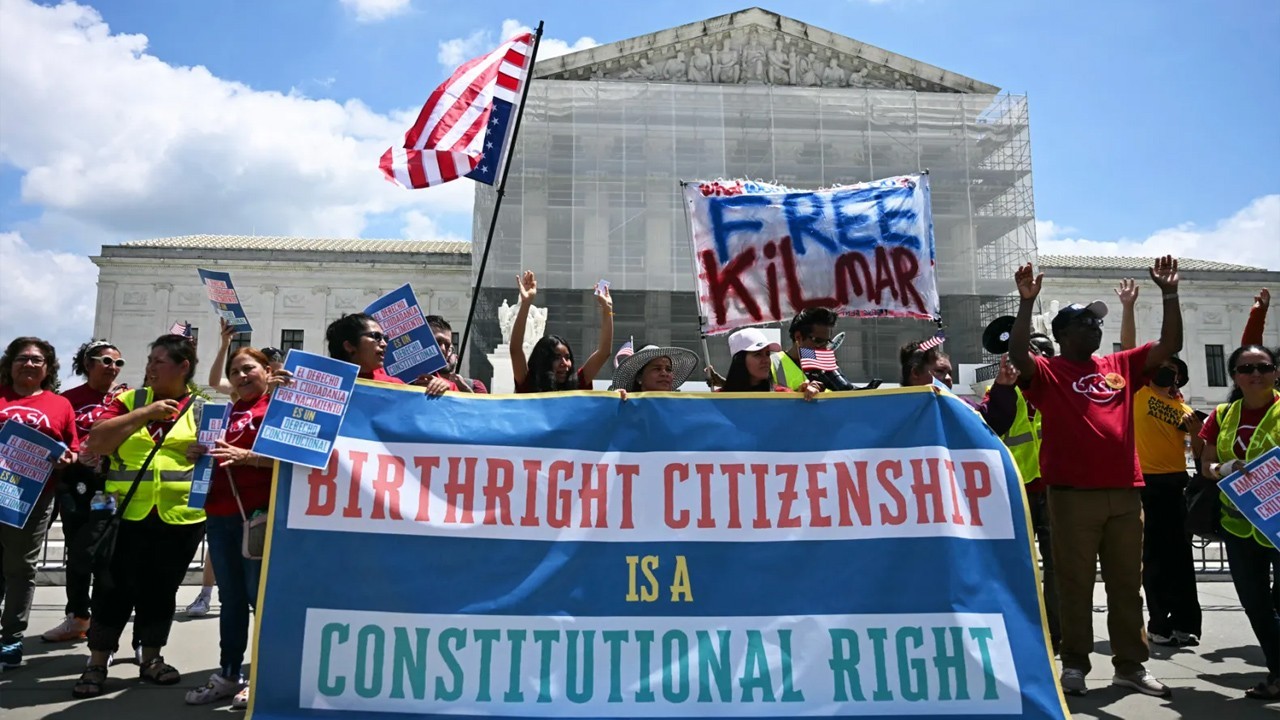
President Donald Trump suffered a major legal setback on Tuesday after the US Supreme Court rejected his attempt to restrict birthright citizenship, ruling that his executive order was unconstitutional.
In a 6-3 decision, the court upheld a lower court's ruling that blocked the order, which sought to deny US citizenship to children born in the country if neither parent was an American citizen or lawful permanent resident.
The ruling marks the second major defeat for Trump at the Supreme Court this year, following the court's decision in February to strike down his global tariff policy.
The case centered on the 14th Amendment of the US Constitution, which guarantees citizenship to nearly everyone born on American soil. Writing for the majority, Chief Justice John Roberts said the amendment has long been understood to provide birthright citizenship, with only limited exceptions.
He stressed that citizenship is a fundamental right that allows individuals to fully participate in American society and said the court was reaffirming that constitutional promise.
Roberts also referred to the landmark 1898 Supreme Court case United States v. Wong Kim Ark, which established that children born in the United States are entitled to citizenship regardless of their parents' nationality.
He rejected the Trump administration's interpretation of the 14th Amendment, describing it as unsupported by history and constitutional text. While Justice Brett Kavanaugh agreed that Trump's order was unlawful, he argued it violated federal law rather than the Constitution itself.
Trump, who signed the executive order on his first day back in office as part of his broader immigration agenda, criticised the ruling and called on Congress to end birthright citizenship through legislation instead of a constitutional amendment.
Legal experts had warned that the policy could have affected the citizenship status of up to 250,000 babies born each year and created significant legal uncertainty for millions of families.
The Supreme Court's decision came just days before the United States celebrates the 250th anniversary of its founding, reinforcing the long-standing interpretation of birthright citizenship under American law.





Comments
0 comment