




Drones, AI and white paint: Europe races to protect infrastructure from heat
Web desk
|
16 Jul 2026
With Europe’s railway system being severely strained by record breaking high temperature, its road surface melting and its electricity network under immense pressure, several measures have been employed in fixing aging infrastructures, including drones for monitoring track conditions and smart sensors as well as a rather unusual measure, which includes painting surfaces white.
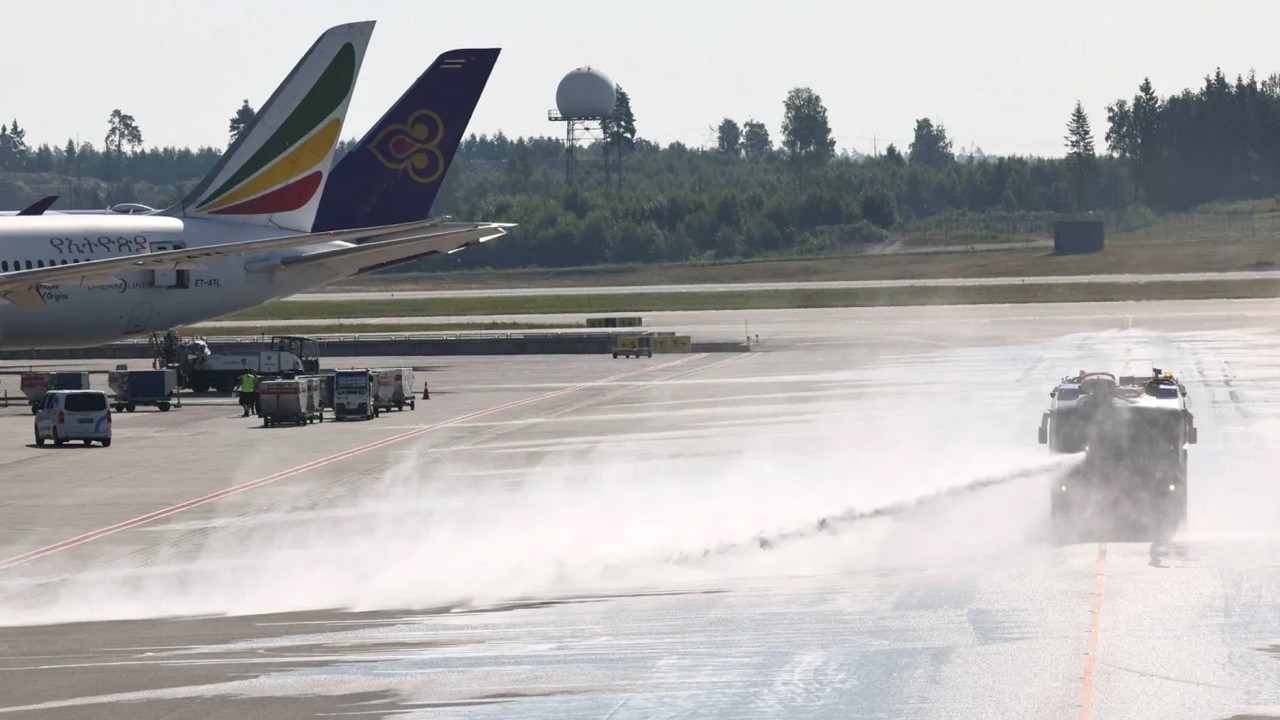
At the airport of Oslo in Norway, where temperatures were predicted to reach 30 degrees Celsius (10 degrees above the normal) on Wednesday, sprinklers were used on the airport's tarmac to cool down the surface.
The use of such measures represents a stark contrast to what is usual for the region, given the efforts of Europe in adjusting to the increasing temperatures that are leading to wildfires, excessive deaths and increased pressure on its infrastructure.
"Asphalt in Norway is required to withstand both freezing weather and somewhat warm weather," said Jrn Arvid Remark, who is operating engineer at Norway's airport operator Avinor.
The fire brigade sprays around 9,000 litres of water on key parts of the runway, which can get damaged at high temperatures as it softens under the weight of aircraft.
Europe’s roads and railways, many built decades ago, are increasingly struggling to cope.
Temperatures across Western Europe on Wednesday were 5.5℃ above the average for July 15, according to the Reuters Climate Monitor.
“Our infrastructure is in no way prepared for the extreme weather events that we’re going to see,” said Chris Dodwell, co-head of sustainability centre at Impax Asset Management, adding heatwaves, once rare, were becoming regular events.
A 2025 report by leading central banks estimated that severe weather events, including heatwaves, droughts and floods, could cut euro zone GDP by as much as 4.7 per cent by 2030.








Comments
0 comment