




Govt allows re-export of transit cargo stuck at Pakistani ports
Web desk
|
14 Jan 2026
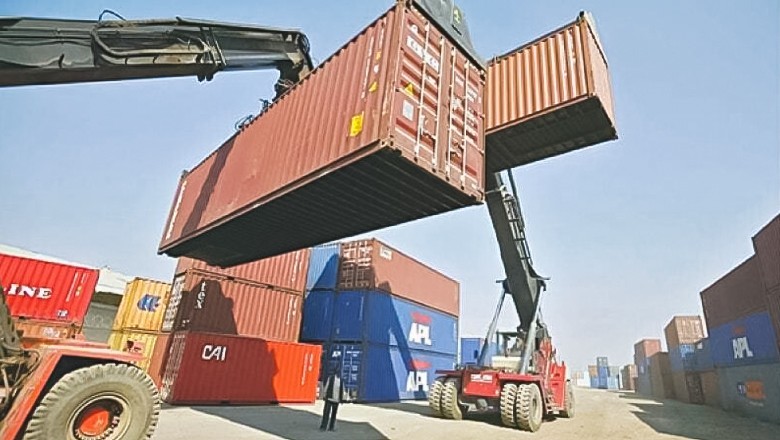
ISLAMABAD: The government has allowed the re-export of transit cargo stuck at Pakistani ports to save Afghan importers from rising demurrage charges.
Importers involved in Afghan Transit Trade have demanded that the Ministry of Commerce immediately accord a onetime waiver for re-export of over 6,500 containers held up at Karachi ports, as they are incurring increasing demurrage charges when there is no sign that the border with Afghanistan will be reopened anytime soon.
The need for re-export arose after the border crossing between Pakistan and Afghanistan was closed on Oct 11, 2025, leading to a near-complete halt of bilateral trade and movement of transit cargo.
The Pakistan-Afghanistan relations have deteriorated amidst tension in regard to the banned Tehreek-i-Taliban Pakistan. After successive rounds, on November 7, Pakistan declared virtually the end of talks, after which Afghanistan suspended trade ties. After the clashes in October, Pakistan had already closed its border.
More than 6,500 shipments are currently stranded at Karachi ports following the closure of the Pak-Afghan border since October.
“Yes, we have issued letters to individual importers who have been approaching the ministry to re-export their cargo,” a Ministry of Commerce official told the private news channel. The commerce minister, the official said, had the authority to exempt the importers for a one-time period.
In a surprising move, the commerce ministry has neither confirmed the news nor started the issuance of export permits in the form of letters to the people who had approached the ministry for the re-export of onions.
However, the greatest number of stranded containers, estimated to be 3,000, belongs to Malaysia, holding palm oil that is meant to be consumed in Afghanistan. «We have already issued letters to most palm oil importers to re-export their containers,» the official said. However, he failed to state the number of palm oil containers that have been approved for re-export.







Comments
0 comment