




Over 29,000 trees removed in Islamabad under anti-pollen campaign
Webdesk
|
8 Jan 2026
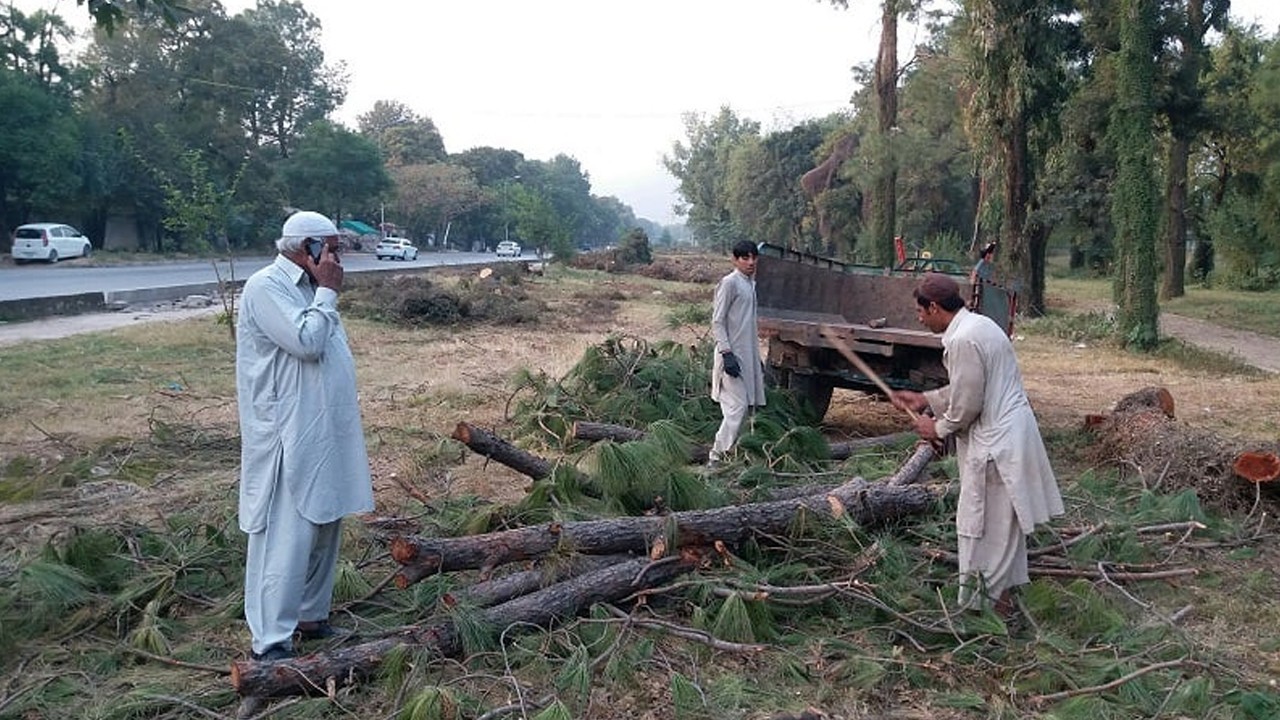
The federal government has reported measurable progress in reducing seasonal pollen allergies in Islamabad after cutting more than 29,000 invasive paper mulberry trees under a large-scale public health and environmental initiative launched in late 2024.
The campaign, launched in the last quarter of 2024 on the directives of the prime minister, was initiated in response to a steady rise in pollen-induced respiratory illnesses. A formal implementation plan was approved at a high-level meeting on November 27, 2024, chaired by the minister of state for national health services, after which the Capital Development Authority (CDA) was tasked with execution and oversight.
According to official data, the operation focused solely on Broussonetia papyrifera (paper mulberry), identified by health experts as the primary contributor to Islamabad’s spring pollen surge. Authorities said a scientific protocol was followed, involving complete uprooting of trees to prevent regrowth, while ensuring that no indigenous species were removed.
Major clearances included 12,800 trees in F-9 Park and 8,700 in Shakarparian, along with removals across residential sectors and key corridors.
Following the eradication phase, authorities have begun ecological restoration, planting three indigenous trees for each mulberry removed. So far, 40,000 native trees have been planted, with further plantation planned by April 2026.
Health officials reported a decline in pollen allergy cases, with vaccination figures dropping by about 23% between 2023 and 2025, indicating early positive public health outcomes from the initiative.









Comments
0 comment