




Mohsin Naqvi Era: Painful losses. victories and Pakistan’s search for stability
Kosar Parveen
|
13 Sep 2026
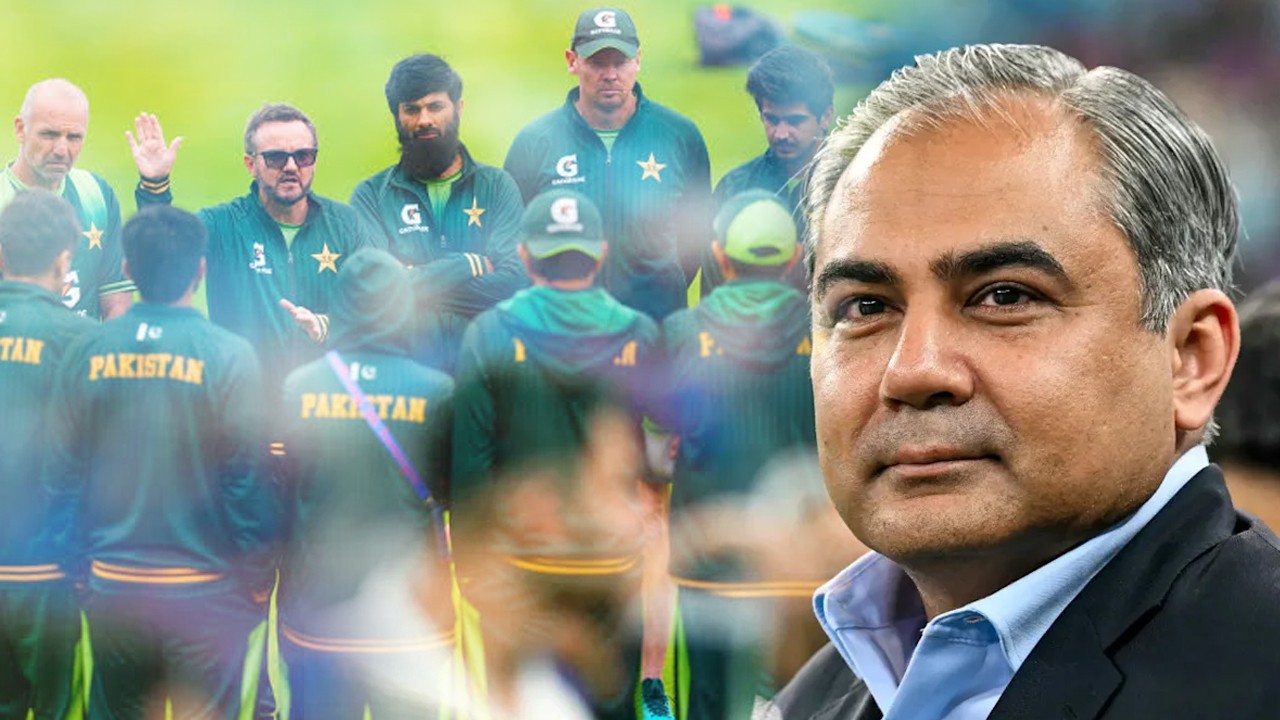
Mohsin Naqvi took charge of the Pakistan Cricket Board (PCB) in February 2024 with a three-year mandate and a promise to bring greater professionalism, merit and structural reform to Pakistan cricket.
More than two years into his tenure, the PCB has introduced changes to the domestic cricket structure, increased the number of senior men’s domestic matches, invested heavily in stadium upgrades and overseen major international events. Yet on the field, Pakistan’s fortunes have remained difficult to predict.
Naqvi inherited a team searching for stability after a disappointing 2023 ODI World Cup campaign and a 3-0 Test series defeat in Australia.
Questions over captaincy, selection, coaching and the overall direction of the national side were already dominating the debate around Pakistan cricket.
His first major international test came at the 2024 T20 World Cup, where Pakistan endured an early exit. The team suffered a shock defeat to co-hosts USA in a Super Over before losing a closely fought contest against India.
The results left Pakistan unable to progress to the Super 8 stage and prompted renewed questions over preparation, selection and leadership.
Pakistan later provided a reminder of its potential with a remarkable turnaround against England in Test cricket. After losing the opening Test in Multan by an innings, Pakistan won the next two matches to secure a 2-1 series victory.
It was the team’s first home Test series win since the 2021-22 season and offered a significant boost to Naqvi’s administration.
The momentum continued in Australia, where Pakistan recovered from defeat in the opening ODI to win the next two matches and claim a 2-1 series victory.
The result was particularly significant given Pakistan’s struggles on previous tours of Australia and demonstrated what the side could achieve when its bowling, batting and tactical execution came together.
However, consistency remained elusive.
Pakistan’s subsequent tour of South Africa ended in a 3-0 ODI series defeat, once again highlighting the gap between the team’s best and worst performances.
The contrasting results in Australia and South Africa reinforced a recurring criticism of Pakistan cricket under Naqvi: the team can produce world-class performances in one series before struggling badly in the next.
The 2025 Champions Trophy brought further pressure. Hosting an ICC tournament on home soil, the PCB had invested heavily in stadium renovations and infrastructure, raising expectations around the national team. Instead, Pakistan lost its opening match against New Zealand and were then beaten by India, ending their campaign before the knockout stage.
The latest setbacks have added to concerns about Pakistan’s ability to compete consistently against top opposition, particularly away from home. A recent series whitewash in England further exposed weaknesses in the team and renewed questions over preparation, leadership and execution.
Leadership stability has also remained a major issue during Naqvi’s tenure. Babar Azam’s captaincy underwent changes before Mohammad Rizwan took over the white-ball leadership, while Pakistan also experienced changes within its coaching and management structures.
While such changes have often been presented as attempts to correct problems, frequent alterations can make it difficult for a team to establish a settled identity and long-term strategy.
Naqvi’s tenure, therefore, presents a mixed picture. The PCB has undertaken significant work away from the field, particularly in domestic cricket and infrastructure, while Pakistan has also recorded notable victories against England and Australia.
But the team’s inability to sustain those performances remains one of the biggest challenges facing the administration.
For now, the administration has made changes to the system. The bigger test will be whether those changes can produce a team capable of winning consistently.







Comments
0 comment