




FREEDOM TO UNALIVE: THE HUMAN COST OF LIVING IN KARACHI
Jahanzaib Sheikh
|
17 Aug 2026
Pakistan marked 79 years of freedom from British colonial rule on Friday. Nationwide celebrations took place through public rallies and jubilant displays of patriotism by citizens—elders, youth, and children alike. Amid all the hype and fanfare, some families in Karachi carried out the last rites of their beloved members, who had hoped to enjoy the festivities but instead fell victim to someone’s sinister urge to make their celebration more spectacular than others—even at the cost of human lives.
According to news reports, three people were killed including a woman and infant, and more than 90 others injured as a result of “hawai firing” in the early hours of Friday, on the eve of Independence Day. The numbers may change, but the headlines remain the same every year, despite repeated bans on arms displays and celebratory gunfire.
Every year, as midnight approaches on New Year’s Eve or August 14, a regular household is haunted by the most unwanted thought of losing their loved ones to the fury of aerial firing. My phone keeps ringing after 11 o’clock at night whenever I go out with my colleagues or friends on one of these fateful nights.I remember my family pleading with me every time to reach home before the clock strikes 12. This is something that every other person in Karachi can relate to.
SMALLEST COFFINS ARE THE HEAVIEST
In the recent past, a number of such casualties have involved children. Last year, on the eve of Independence Day, a minor girl from Azizabad was killed after being struck by a stray bullet. Mirha was only six years old. She went to the terrace in anticipation and excitement to watch the fireworks when she became an innocent victim of the brutality carried out in the name of celebration.
“It took seconds, and she was no more,” Mirha’s father said, expressing his grief in an interview with Dialogue Pakistan. “Should we decorate the graves now on Independence Day?” another relative remarked, speaking of the lifelong distress and trauma the family was left with simply because someone in their neighbourhood thought celebratory gunfire was a cool stunt to perform.
Similarly, in 2024, during the early hours of New Year’s Day, three-year-old Sania lost her life in an aerial firing incident. “We do not know how to be happy. This is not a normal way to express happiness where people have to lose their lives,” her grieving father told Dialogue Pakistan as he laid his innocent child to rest on the first day of the new year.
Over the years, the country’s largest metropolis has witnessed a sharp rise in street crime and road accidents, with young people remaining among the primary victims. More recently, a number of street crime cases involving minors and children have also emerged, adding to the woes of Karachi’s deteriorating law-and-order situation. Why are the younger generations of the city paying the price for lawlessness seemingly imposed by design? It is a question that deserves the attention of the country’s decision-makers.
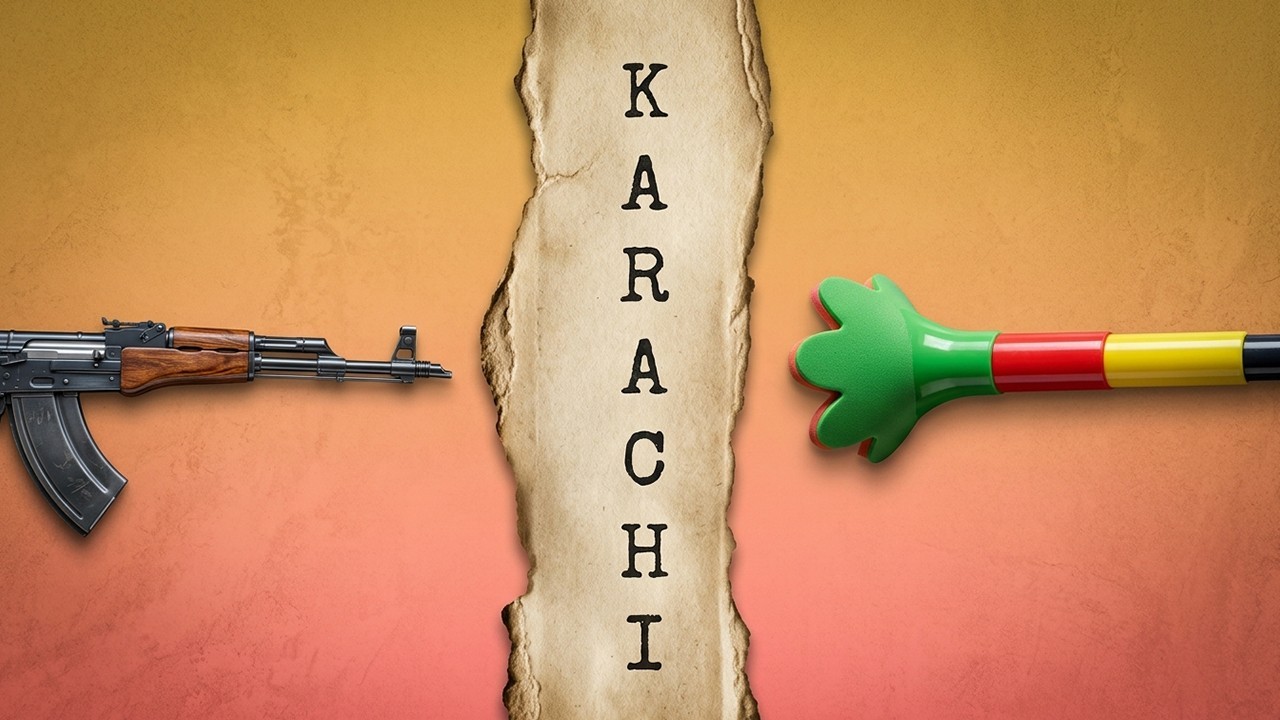
Priorities Matter: Bullets or Baaja?
Apart from the sounds of bullets, social media also buzzed with “baaja” celebrations. The multicoloured toy horn has become synonymous with August 14 celebrations among children and teenagers, who treat it as a “national musical instrument,” regardless of how much it annoys everyone on the other side.
In the midst of the uproar over baaja and bullets, Governor Sindh Nehal Hashmi also made headlines on social media for his furious remarks about the methods of celebration—not to mention aerial firing—involving dance and musical instruments. “Did Mirasis (musicians and entertainers) make Pakistan?” he asked during a speech at an Independence Day event in Karachi.
The political atmosphere in Karachi is already tense following the gruesome murder of entrepreneur and Wafflix owner Mir Raza Ali Khan. Lawyer and human rights activist Jibran Nasir, along with the victim’s family, has raised serious concerns over the alleged mishandling of the case in favour of some “mysterious” and “powerful” hands involved in the case.
The PPP’s provincial government, as any silent observer could notice, appears to be attempting to downplay genuine concerns over accountability for its 18 years in power—particularly in the Mir Raza murder case—by injecting ethno-nationalist sentiments into the national discourse on the creation of new administrative units. Meanwhile, leaders of the disgruntled MQM, despite grappling with internal factionalism, have vowed to celebrate the next Independence Day in Karachi as a “separate province.”
As political parties assert their own right to the city with all their valour and vanity, the voices of its citizens—regardless of their ethnicity—are less likely to be heard, let alone addressed.
While the Independence Day fervour has long faded for many of us, the spirit of patriotism still awaits sanity and common sense to prevail. It is high time for citizens and stakeholders alike to unite around one simple, binding oath: “No one has the right to play with human lives for their enjoyment.”
Comments
0 comment